Expanding Grid Mechanics: How Dynamic Row Additions Reshape Prize Pathways in Regulated Mobile Gaming Platforms

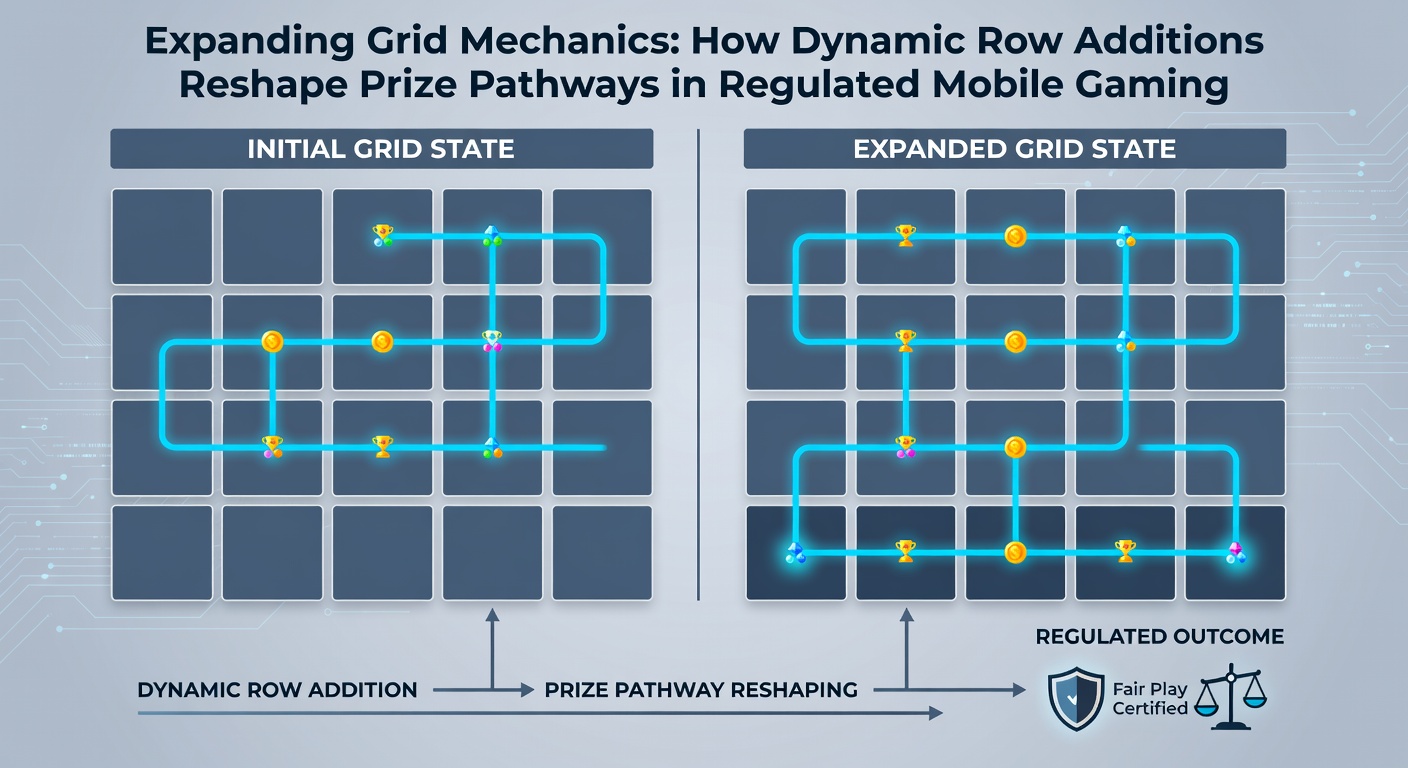
Expanding grid mechanics introduce additional rows during play sessions, and these additions create fresh symbol alignments that alter win calculations across regulated mobile platforms. Developers implement these systems through predefined triggers such as consecutive wins or scatter landings, after which the grid height increases by one or more rows while maintaining column structure. The process extends reel height dynamically, which multiplies potential combinations without altering base reel strips.
Regulated operators integrate these features under strict technical standards that require transparent random number generation and payout verification at each expansion stage. Data from the Nevada Gaming Control Board shows that mobile titles incorporating row additions have recorded higher average session durations in audited markets since 2024, as players encounter progressive reel states that build across spins.
Core Components of Dynamic Row Systems
Each expansion event adds new positions that symbols can occupy, and this directly modifies the total ways-to-win calculation in real time. Software engines recalculate prize pathways after every row increase, which means a single base game spin can evolve into multiple evaluation layers. Observers note that the mechanism avoids fixed reel heights found in traditional video slots, instead relying on runtime adjustments that respond to in-game events.
Animation sequences accompany these changes to signal the transition, while backend logs capture the exact moment new rows activate for compliance audits. Mobile platforms must display clear indicators of current grid dimensions because regulators require visible information on active paylines or ways. Those who have examined certification reports confirm that testing labs verify both the expansion logic and the subsequent symbol drop mechanics before approving titles for release.
Effects on Prize Pathway Calculations
When rows are added, the number of possible symbol adjacencies grows exponentially in many implementations, which creates additional routes for matching combinations to form. Prize pathways therefore extend vertically and diagonally in some configurations, whereas horizontal lines remain the primary evaluation method in others. Research indicates that this vertical stretching produces payout distributions that differ from static grids because new symbol positions can complete clusters that would otherwise remain incomplete.
Platforms often pair expansion features with multiplier ladders that scale according to the number of added rows, yet the core mathematics stays anchored to the underlying reel strips and symbol frequencies. Figures from the Alcohol and Gaming Commission of Ontario reveal steady adoption of such layered evaluation methods across Canadian-facing mobile applications, with operators reporting consistent compliance through automated monitoring tools.
Integration Within Regulated Mobile Ecosystems
Operators in multiple jurisdictions deploy expanding grid titles through certified remote gaming servers that log every state change for traceability. These servers communicate with client applications on smartphones and tablets to render the updated grid without introducing latency that could affect fairness. Technical standards mandate that all random outcomes remain independent of visual expansions, so the addition of rows functions purely as a presentation layer built on top of fixed probability tables.
In May 2026 several platforms rolled out updated versions of established titles that incorporated refined row-addition triggers designed to align with new accessibility guidelines. The changes included optional simplified display modes that reduce animation complexity while preserving the same mathematical outcomes, which helps operators meet requirements across different regulatory regions without fragmenting their game libraries.
Player Interaction Patterns and Platform Data
Telemetry collected from live mobile sessions shows that players often adjust bet sizes after witnessing the first expansion event, and this behavioral shift occurs because the visible increase in grid height signals potential for larger symbol clusters. Yet the underlying return-to-player percentages stay constant regardless of row count because expansion events are already factored into the certified math models. Industry reports from the World Lottery Association highlight that transparent communication of these mechanics correlates with longer verified play sessions in licensed environments.
Developers continue to refine trigger conditions so that expansions occur at balanced intervals, and this calibration process draws on aggregated anonymized data submitted during compliance reviews. The result is a library of games where row additions serve as a pacing tool rather than an unpredictable variable.
Conclusion
Dynamic row additions have become a standard component in many modern mobile slot designs, and they reshape prize pathways by extending the playable area in response to specific in-game conditions. Regulated platforms manage these mechanics through rigorous certification, continuous logging, and adherence to jurisdiction-specific display rules. As mobile technology evolves, the same principles of transparent expansion and verified probability continue to guide implementation across markets.